Which Meditation Is Best for Anxiety? What Actually Works
Anxiety is more than just occasional stress—it’s a constant feeling of uneasiness, restlessness, and racing thoughts that are hard to control. The mind keeps jumping between worries about the future and thoughts from the past, making it difficult to stay calm or focused. Even when you try to relax, the thoughts don’t stop easily.
This happens because the mind becomes overactive and does not have a stable direction. It keeps searching for solutions, analyzing situations, and repeating the same concerns again and again. Over time, this creates mental fatigue and emotional imbalance.
Because of this, many people turn to meditation as a solution. It is often recommended as a way to calm the mind and reduce anxiety naturally. However, not all meditation techniques work the same way, especially for people dealing with constant mental activity.
Some methods feel too passive, allowing anxious thoughts to return quickly. Others require effort, which can make the mind feel even more active. This creates confusion about what actually works.
People search for the best meditation for anxiety because:
- the mind feels constantly restless
- thoughts are difficult to control
- stress and worry increase
- emotional balance is affected
- they need a simple and effective solution
In the next section, we will understand why anxiety happens in the first place.
Why Anxiety Happens
Anxiety happens when the mind becomes overactive and starts reacting to thoughts instead of simply observing them. When there is no stable direction, the mind keeps jumping between worries, fears, and imagined scenarios. This constant mental activity creates a feeling of restlessness.
The main reasons include:
- overactive thinking
- emotional triggers
- stress and uncertainty
- lack of mental control
- habit of worrying about outcomes
The mind naturally tries to predict the future and avoid problems. But when this process becomes excessive, it turns into anxiety. Instead of solving problems, the mind keeps repeating them.
Another major factor is emotional attachment. When something feels important or uncertain, the mind keeps returning to it again and again, strengthening the cycle of anxiety.
Most people try to “stop worrying,” but that rarely works. The mind does not stop just because you want it to. In fact, trying to suppress thoughts often makes them stronger.
👉 The real issue is not anxiety itself—it is the lack of direction and control in the mind.
What Type of Meditation Works for Anxiety
Not every meditation technique works effectively for anxiety. Since anxiety is caused by an overactive and reactive mind, the solution should calm the mind without making it more active or leaving it without direction.
The right type of meditation includes:
- gives the mind a gentle anchor
- does not require forceful control
- reduces mental reactivity
- keeps awareness stable
- feels natural and effortless
If a method is too passive, the mind quickly returns to anxious thoughts. If it is too active, it can increase mental effort and make anxiety worse. This is why many people feel that meditation is not working for them.
For anxiety, the mind needs a balanced approach. It should have something simple to follow, but not something that creates pressure or strain.
This is where mantra-based approaches can help. When you repeat a sound or phrase naturally, your mind gets a stable point to return to. For example, softly repeating a mantra like “Hare Krishna Hare Krishna, Krishna Krishna Hare Hare, Hare Rama Hare Rama, Rama Rama Hare Hare” can help bring your attention away from anxious thoughts.
👉 The goal is not to fight anxiety, but to gently guide the mind away from it.
Common Meditation Types for Anxiety
When dealing with anxiety, people often try different meditation methods hoping to calm their mind. While these techniques can help to some extent, they do not always provide consistent results for everyone.
The most common meditation types include:
- breathing meditation
- mindfulness meditation
- guided meditation
- mantra meditation
Breathing meditation focuses on observing the breath. It can calm the body, but because it is passive, the mind may quickly return to anxious thoughts.
Mindfulness meditation teaches you to observe thoughts without reacting. This builds awareness, but it requires effort and practice, which can feel difficult when anxiety is high.
Guided meditation uses instructions or audio to help you relax. It is easy to follow, but it creates dependency. Without guidance, many people struggle to stay calm.
Mantra meditation keeps the mind engaged through repetition. Using a mantra like “Hare Krishna Hare Krishna, Krishna Krishna Hare Hare, Hare Rama Hare Rama, Rama Rama Hare Hare” can help reduce mental noise. However, if done with effort, it may feel tiring.
👉 Each method offers some benefit, but none fully balance ease, awareness, and consistency.
Why Most Meditation Fails for Anxiety
Most meditation methods fail for anxiety because they do not match how the anxious mind actually behaves. Anxiety is not just about having thoughts—it is about the mind being constantly reactive and unsettled. When a meditation method does not address this properly, it becomes difficult to get consistent results.
The main reasons include:
- methods are too passive
- methods are too effortful
- lack of a stable mental anchor
- dependency on external guidance
- difficulty maintaining consistency
In passive methods like breathing meditation, the mind is not given enough direction. As a result, it easily drifts back into anxious thoughts, making it feel like nothing is changing.
In effort-based methods like mindfulness or forced repetition, the mind stays active. This can increase mental pressure instead of reducing anxiety.
Guided meditation creates dependency. When the guidance stops, the mind often returns to its usual anxious patterns.
Even mantra meditation can feel ineffective if it is done forcefully. Repeating something with effort does not calm the mind—it can create more internal activity.
👉 The core issue is imbalance:
- too passive → anxiety returns
- too active → mind stays restless
👉 In simple terms:
Meditation fails when it either gives the mind no direction or creates too much effort.
What Actually Works for Anxiety
To reduce anxiety effectively, the mind needs a method that gives it a calm direction without adding pressure. The goal is not to eliminate thoughts, but to reduce their intensity and stop the constant reaction to them.
The key elements that work include:
- a gentle mental anchor
- no forceful concentration
- balanced engagement
- effortless awareness
- consistency over time
When the mind has something simple to follow, it naturally shifts away from anxious loops. At the same time, the method should not feel like work. If it requires effort, the mind stays active instead of becoming calm.
This is where mantra-based approaches can help—when used correctly. Instead of forcing repetition, the mantra should flow naturally. For example, softly repeating “Hare Krishna Hare Krishna, Krishna Krishna Hare Hare, Hare Rama Hare Rama, Rama Rama Hare Hare” can gently bring the mind back whenever anxiety starts to rise.
The effectiveness comes from the balance:
- not controlling the mind
- not leaving it uncontrolled
- guiding it gently
👉 In simple terms:
The mind becomes calm when it is guided naturally, not forced or suppressed.
Best Meditation for Anxiety
The most effective meditation for anxiety is one that keeps the mind calm, stable, and gently engaged without effort or dependency. This is where Transcendental Meditation stands out as a practical and sustainable approach.
The key advantages include:
- keeps the mind naturally calm
- does not require forceful concentration
- does not depend on external guidance
- reduces anxiety gradually
- easy to practice daily
Unlike breathing meditation, it does not leave the mind without direction. Unlike guided meditation, it does not rely on a voice or instructions. And unlike effortful repetition, it does not create strain.
Instead, it uses a mantra in a natural and effortless way. The sound acts as a soft anchor, allowing the mind to settle without pressure. This helps reduce mental reactivity, which is a major cause of anxiety.
You can use a simple mantra or a traditional one like
“Hare Krishna Hare Krishna, Krishna Krishna Hare Hare, Hare Rama Hare Rama, Rama Rama Hare Hare”
and allow it to flow gently in your mind without forcing it.
Over time, this creates a stable state where the mind becomes less reactive and more peaceful.
👉 In simple terms:
The best meditation for anxiety is one that calms the mind without effort and without dependency.
Simple Way to Start This Meditation
Follow these simple steps:
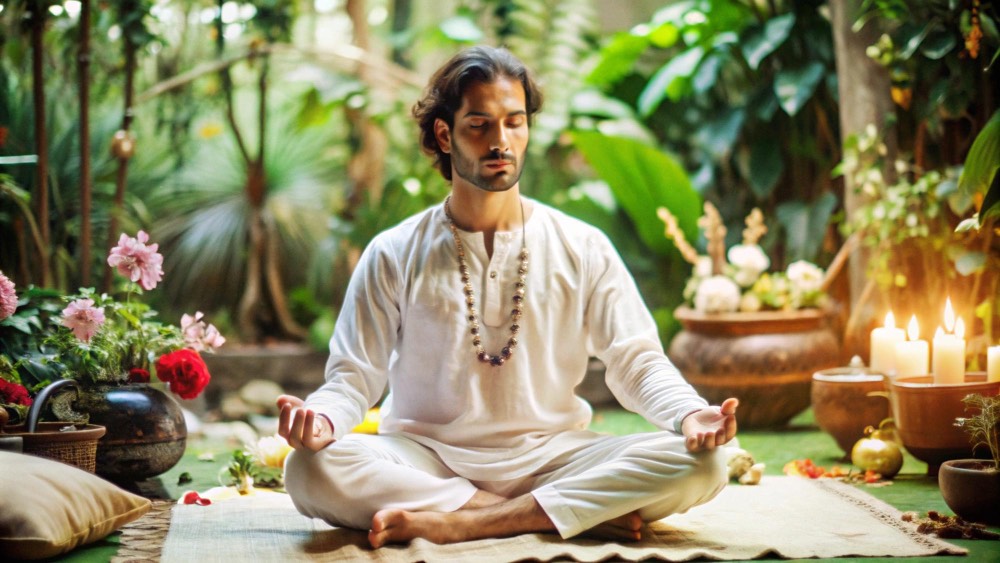
- sit comfortably in a quiet place
- close your eyes gently
- repeat a mantra silently
- do not force concentration
- return to the mantra when distracted
Sit in a relaxed position where your body feels comfortable and stable. You don’t need any special posture—just ensure you can sit without strain. Close your eyes and allow your body to settle naturally.
Now begin repeating a mantra softly in your mind. You can use a traditional mantra such as
“Hare Krishna Hare Krishna, Krishna Krishna Hare Hare, Hare Rama Hare Rama, Rama Rama Hare Hare.”
Let the repetition flow naturally instead of trying to control it.
You are not focusing hard—you are simply allowing your mind to follow the sound. The mantra gives your mind a gentle anchor, helping it stay steady without effort.
If thoughts come, do not resist them. This is completely normal. Just bring your attention back to the mantra gently. This returning process helps your mind become more stable over time.
Practice for about 10–20 minutes daily. Consistency matters more than perfection. Over time, your mind becomes calmer, clearer, and less reactive.
👉 In simple terms:
You are not controlling your mind—you are guiding it gently using a mantra.
Benefits of Meditation for Anxiety
When practiced correctly, meditation can gradually reduce anxiety and bring stability to the mind. Instead of trying to suppress anxious thoughts, it helps the mind respond more calmly and reduces emotional reactivity over time.
The key benefits include:
- reduces anxious thinking
- improves emotional stability
- lowers stress levels
- increases mental clarity
- helps break worry cycles
As you continue practicing, the intensity of anxious thoughts begins to decrease. The mind no longer reacts instantly to every thought or situation. Instead, it becomes more steady and less sensitive to triggers.
Using a gentle anchor like a mantra—such as
“Hare Krishna Hare Krishna, Krishna Krishna Hare Hare, Hare Rama Hare Rama, Rama Rama Hare Hare”—
helps the mind return from anxiety without effort. This repeated process gradually weakens the habit of constant worrying.
Over time, you start noticing more calmness between thoughts. This creates a sense of control and clarity that feels natural, not forced.
👉 In simple terms:
Meditation does not remove anxiety completely—it reduces its intensity and control over your mind.
Which Meditation Should You Choose?
Choose based on your situation:
- constant anxiety → balanced mantra-based meditation
- need quick relaxation → guided meditation
- want awareness practice → mindfulness meditation
- struggle with focus → mantra meditation
- want long-term solution → Transcendental Meditation
If your main issue is anxiety, you need a method that gives your mind direction without creating pressure. Passive methods may not hold your attention, and effort-based methods can feel overwhelming.
Guided meditation can help in the short term by relaxing your mind, but it often creates dependency. Mindfulness builds awareness, but it requires effort and consistency, which can be difficult when anxiety is high.
Mantra meditation is a better option because it gives your mind a steady anchor. Using a mantra like
“Hare Krishna Hare Krishna, Krishna Krishna Hare Hare, Hare Rama Hare Rama, Rama Rama Hare Hare”
can help bring your attention back whenever anxiety starts to rise.
However, for long-term results, a more balanced approach works best. Transcendental Meditation keeps the mind calm without effort and does not depend on external guidance, making it easier to sustain daily.
👉 In simple terms:
Short-term relief → guided or breathing
Better control → mantra
Long-term solution → balanced meditation
Frequently Asked Questions (FAQ)
1. Which meditation is best for anxiety?
- balanced mantra-based approach works best
The most effective meditation for anxiety is one that gives the mind a gentle direction without creating effort. Methods that are too passive or too active often fail to reduce anxiety consistently.
2. Can mantra meditation help with anxiety?
- yes, when practiced naturally
Mantra meditation can help reduce anxiety by giving the mind a stable anchor. Repeating a mantra like
“Hare Krishna Hare Krishna, Krishna Krishna Hare Hare, Hare Rama Hare Rama, Rama Rama Hare Hare”
helps bring your attention back from anxious thoughts.
3. Why does breathing meditation not work for anxiety sometimes?
- too passive
Breathing meditation may not work for everyone because it does not strongly engage the mind. This allows anxious thoughts to return easily.
4. How long does meditation take to reduce anxiety?
- depends on consistency
With regular practice, many people start noticing changes within a few weeks. Consistency matters more than duration.
5. Can meditation completely remove anxiety?
- no, but it can be controlled
Meditation does not eliminate anxiety completely, but it reduces its intensity and helps you manage it more effectively.
Conclusion – Finding Calmness Naturally
Anxiety cannot be removed by force. The more you try to control your thoughts, the more restless the mind becomes. What actually works is giving the mind a gentle and natural direction.
Different meditation methods offer partial relief, but most of them fall into two extremes—either too passive or too effortful. This makes it difficult to achieve consistent results.
A balanced approach works best. When the mind is guided without effort, it naturally becomes calm and stable. Using a mantra like
“Hare Krishna Hare Krishna, Krishna Krishna Hare Hare, Hare Rama Hare Rama, Rama Rama Hare Hare”
can help bring your mind back from anxiety without pressure.
👉 Final takeaway:
Anxiety reduces when the mind is guided gently—not forced, not suppressed.
With consistent practice, your mind becomes calmer, clearer, and more stable over time.