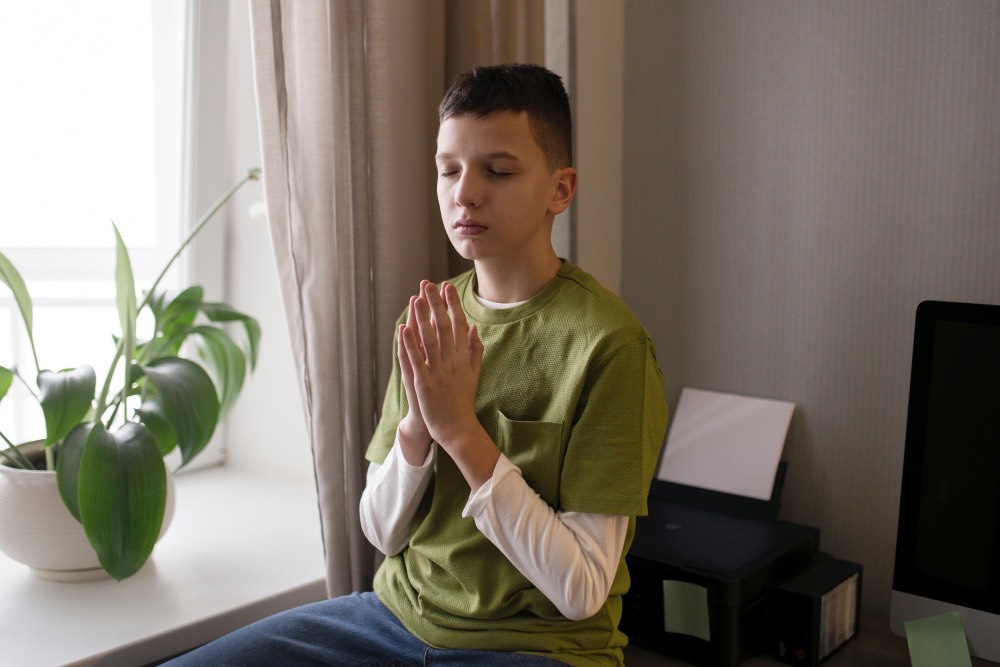

How to Do Meditation at Home: A Simple Guide for Students and Kids

How to Do Meditation at Home: A Simple Guide for Students and Kids
Introduction – Why People Want to Learn Meditation at Home
Many people today are searching for simple ways to improve focus, reduce stress, and feel more calm in daily life. This is why questions like “how to do meditation at home,” “how to do meditation for students,” and “how to do meditation for kids” have become very common.
Students often look for meditation to improve concentration during studies and reduce exam pressure. Parents search for ways to help their children become calmer and more focused. Others simply want a way to relax their mind after a busy day.
The good news is that meditation does not require a special place, expensive tools, or complex techniques. You can start meditation at home with just a few simple steps.
However, beginners often feel confused about how to start. They may think meditation means stopping all thoughts or sitting in complete silence, which can feel difficult.
In reality, meditation can be simple, practical, and easy to follow, especially when done with the right method.
In this guide, you will learn:
- how to do meditation at home step by step
- how students can use meditation for better focus
- how kids can practice meditation in a simple way
In the next section, we will begin with a simple question: what is meditation and how does it actually work?
What Is Meditation? (Simple Explanation)
Meditation is simply a way to train the mind to become more focused and calm. It does not mean forcing the mind to be completely silent or stopping all thoughts. Instead, meditation helps you guide your attention in a steady and relaxed way.
In daily life, the mind is constantly active. It jumps from one thought to another—thinking about the past, planning the future, or reacting to situations. This continuous activity can lead to stress, distraction, and lack of focus.
Meditation works by giving the mind a simple point of focus. This could be:
- the breath
- a sound
- or a repeated word (mantra)
When your attention stays on one steady point, the mind gradually becomes less restless. Thoughts may still come, but they become less intense over time.
One important thing to understand is:
👉 Meditation is not about removing thoughts
👉 It is about gently bringing attention back when the mind wanders
Among different methods, mantra-based meditation is often easier for beginners. Instead of trying to focus on silence, you repeat a simple sound, which helps the mind stay engaged and calm.
In the next section, we will go step by step and learn how to do meditation at home in a simple and practical way.
How to Do Meditation at Home (Step-by-Step)
This is the core part of your practice. If you follow these steps consistently, meditation will become natural and effective over time. The goal is not perfection, but steady and relaxed practice.
1. Choose a Quiet and Comfortable Place
Start by selecting a place where you feel comfortable and won’t be disturbed.
- It can be your room, a corner of your house, or any calm space
- It does not need to be completely silent
- Keep the place clean and simple
👉 The purpose is to create an environment where your mind can settle easily without distractions.
2. Sit in a Relaxed Position
You do not need complicated yoga postures.
- Sit on a chair or on the floor
- Keep your back straight but not stiff
- Rest your hands naturally on your lap
👉 Comfort is important. If your body is uncomfortable, your mind will keep getting distracted.
3. Close Your Eyes Gently
Close your eyes without pressure.
- This helps reduce external distractions
- It allows your attention to move inward
Take a few seconds to relax your body and mind before starting.
4. Take a Few Natural Breaths
Before starting the mantra, just observe your breathing.
- Do not control your breath
- Just notice it naturally going in and out
👉 This step helps your mind transition from activity to calm awareness.
5. Begin Repeating the Mantra
Now start the core part of meditation.
Silently repeat the mantra in your mind:
Hare Krishna Hare Krishna
Krishna Krishna Hare Hare
Hare Rama Hare Rama
Rama Rama Hare Hare
- Repeat at a comfortable pace
- Do not rush or chant too fast
- Let the sound flow naturally
👉 The key is to hear the mantra in your mind, not just repeat it mechanically.
6. Focus on Hearing the Sound
This is the most important part.
- Pay attention to each word of the mantra
- Listen to it internally as you repeat
👉 Meditation works when you hear what you are repeating.
This keeps the mind engaged and prevents it from wandering too much.
7. Handle Distractions Naturally
Your mind will wander. This is completely normal.
You may notice:
- random thoughts
- planning
- remembering past events
👉 Do not get frustrated.
Instead:
- notice the distraction
- gently bring your attention back to the mantra
This returning is not failure—it is the practice itself.
8. Continue for 10–20 Minutes
- Beginners: start with 10 minutes
- Gradually increase to 15–20 minutes
- Ideally practice once or twice daily
👉 Consistency is more important than long sessions.
9. End the Session Gently
When your time is complete:
- stop repeating the mantra
- sit quietly for a minute
- slowly open your eyes
👉 This helps your mind adjust back to normal activity smoothly.
Key Understanding
- Do not try to force silence
- Do not try to control thoughts
- Do not aim for a “perfect” session
👉 Just repeat the mantra and return to it calmly
If you follow this method daily, meditation will gradually become easier and more natural.
How to Do Meditation for Kids
Meditation for kids should be simple, gentle, and enjoyable. Children do not need complex instructions or long sessions to benefit from meditation. The goal is to help them become calm, focused, and aware in a natural way. When introduced correctly, meditation can support their concentration, emotional balance, and behavior. It is important to keep the practice short so they do not feel bored or forced. Instead of silence, using a simple mantra helps keep their mind engaged. Over time, even a few minutes of daily practice can make a noticeable difference in their focus and calmness.
- Keep sessions short (5–10 minutes)
- Use simple and clear instructions
- Encourage gentle mantra repetition
- Do not force or pressure the child
- Practice daily for consistency
- Keep the environment calm and comfortable
Common Mistakes Beginners Make
Many beginners think meditation is difficult, but most problems come from small mistakes in approach. Understanding these mistakes can make your practice much easier and more effective. Meditation is not about forcing the mind or achieving perfection. It is about practicing in a simple and natural way. When beginners expect instant results or try too hard to control their thoughts, they often feel frustrated. The key is to stay relaxed, consistent, and patient. Avoiding these common mistakes will help you build a steady meditation habit.
- trying to force the mind to become silent
- expecting quick or instant results
- getting frustrated when thoughts come
- practicing irregularly
- overthinking the process
- not focusing properly on the mantra
In the next section, we will understand what actually happens during meditation and why these experiences are normal.
What Happens During Meditation
When you start meditation, the mind does not become silent immediately. It is natural for thoughts, distractions, and restlessness to appear. This happens because the mind is used to constant activity. As you begin repeating the mantra, the mind slowly starts shifting toward a calmer state. This process takes time and happens gradually with regular practice. Some sessions may feel peaceful, while others may feel busy—both are normal. The key is to stay consistent and not judge your experience.
- thoughts will continue to come
- mind may wander frequently
- you may feel calm at times
- sometimes you may feel restless
- short moments of silence may appear
- all experiences are normal
In the next section, we will see why mantra-based meditation is easier and more effective for beginners at home.
Why Mantra-Based Meditation Is Easier at Home
Many beginners find meditation difficult because the mind is naturally active. Trying to focus on silence or just the breath can feel challenging, especially at home where distractions are common. This is where mantra-based meditation becomes easier. Instead of leaving the mind without direction, the mantra gives it a clear and steady focus. Repeating a simple sound helps reduce wandering and keeps the mind engaged. This makes the practice more natural and easier to maintain daily. For beginners, students, and even kids, this method feels more structured and practical.
- gives the mind a clear focus
- reduces distraction naturally
- easier than focusing on silence
- helps maintain consistency
- suitable for beginners and students
- works well in a home environment
In the next section, we will show a simple mantra meditation you can start practicing today.
Why Mantra-Based Meditation Is Easier at Home
Many beginners find meditation difficult because the mind is naturally active. Trying to focus on silence or just the breath can feel challenging, especially at home where distractions are common. This is where mantra-based meditation becomes easier. Instead of leaving the mind without direction, the mantra gives it a clear and steady focus. Repeating a simple sound helps reduce wandering and keeps the mind engaged. This makes the practice more natural and easier to maintain daily. For beginners, students, and even kids, this method feels more structured and practical.
- gives the mind a clear focus
- reduces distraction naturally
- easier than focusing on silence
- helps maintain consistency
- suitable for beginners and students
- works well in a home environment
In the next section, we will show a simple mantra meditation you can start practicing today.
Conclusion – Start Meditation at Home Today
Meditation is simple and accessible to everyone. You do not need special tools, training, or a perfect environment to begin. Whether you are a student, a parent, or just someone looking for calmness, you can start meditation at home with a few simple steps. The key is to keep the practice easy, consistent, and natural.
By using a mantra, meditation becomes more structured and easier to follow. Instead of struggling with silence, you give your mind a clear focus. Over time, this helps improve concentration, reduce stress, and bring more balance into daily life.
You don’t need to wait for the “right time” to begin. Start with just a few minutes each day and build gradually. What matters most is regular practice, not perfection.
- start with 10 minutes daily
- stay consistent rather than perfect
- keep the practice simple
- focus on the mantra
- be patient with the process
With steady practice, meditation will naturally become a part of your routine. Start today, and let the benefits grow over time.