
Yoga Nidra Meditation: How It Works, Benefits & A Better Alternative
Introduction – Why Yoga Nidra Meditation Is So Popular
In recent years, searches for yoga nidra meditation, yoga nidra meditation for sleep, and guided yoga nidra meditationhave increased significantly. This is because many people today are struggling with stress, poor sleep, and constant mental fatigue. They are looking for a method that feels easy, relaxing, and does not require effort.
Yoga Nidra is often described as “meditation while lying down” or even “yogic sleep.” This makes it very attractive, especially for beginners who find traditional meditation difficult. Instead of sitting and trying to focus, you simply lie down and follow guided instructions. Because of this, many people use it mainly for relaxation and better sleep.
The promise sounds simple:
- no need to sit still
- no need to control your thoughts
- just listen and relax
This is why Yoga Nidra is widely used for:
- stress relief
- anxiety reduction
- improving sleep quality
- deep relaxation
However, there is an important point most people miss.
👉 Relaxation is not the same as meditation depth.
While Yoga Nidra helps the body relax and can improve sleep, many people eventually realize that it does not always lead to deeper mental clarity or long-term inner stability. In fact, some users end up using it more like a sleep tool rather than a true meditation practice.
This raises an important question:
Is Yoga Nidra enough for real meditation, or is there a more effective approach?
What Is Yoga Nidra Meditation?
Yoga Nidra meditation is a guided relaxation technique often referred to as “yogic sleep.” In this practice, you lie down comfortably while staying in a state between wakefulness and sleep. The goal is to relax the body completely while keeping a slight level of awareness.
The practice typically includes:
- a body scan (relaxing each part step by step)
- awareness of breath
- guided visualisation or instructions
- a calm, semi-conscious state
Yoga Nidra works by slowly taking your attention through different layers of the body and mind. As you follow the guided instructions, your body begins to relax deeply, and mental activity starts to slow down. This creates a state where you are not fully awake, but not completely asleep either.
Because the process is guided, you do not need to make any effort. You simply listen and follow along. This is why many beginners find it very easy to start compared to other meditation techniques.
However, this passive nature also creates a limitation. Since you are not actively engaging your mind, your awareness can drop easily. Many people either lose track of the instructions midway or fall asleep completely.
Over time, this turns Yoga Nidra into more of a relaxation or sleep aid rather than a consistent meditation practice. While it helps the body rest, it does not always train the mind to stay stable and aware.
👉 In simple terms:
Yoga Nidra helps you relax deeply, but it does not always develop strong mental awareness.
In the next section, we will understand how Yoga Nidra meditation works step by step.
How Yoga Nidra Meditation Works
Yoga Nidra meditation works by guiding your attention through different stages of relaxation, gradually moving your mind from an active state to a deeply relaxed state. Instead of focusing or controlling thoughts, you simply follow instructions that take you inward step by step.
The process usually includes:
- lying down in a comfortable position
- guided body scan (rotation of awareness)
- observing the breath
- visualisation or mental imagery
- entering a relaxed, semi-conscious state
As the session begins, your body starts to relax through the body scan. This helps release physical tension. Then, attention shifts to breathing, which slows down mental activity. As you continue, guided instructions lead you into a deeper state where the mind becomes quieter.
Because everything is guided, you do not need to think or control anything. You are simply listening and following. This makes the process feel easy and effortless, especially for beginners.
However, this is where a key limitation appears. Since the method is fully passive, your awareness is not actively maintained. As relaxation deepens, the mind can easily drift into sleep instead of staying aware.
Over time, many people experience:
- falling asleep during sessions
- losing track of instructions
- inconsistent awareness
This means the practice becomes more about relaxation than true meditation. While the body benefits from rest, the mind is not always trained to stay stable and conscious.
👉 In simple terms:
Yoga Nidra works by relaxing the body deeply, but it does not always keep the mind actively aware.
In the next section, we will go through how to do Yoga Nidra meditation step by step.
How to Do Yoga Nidra Meditation (Step-by-Step Guide)
Yoga Nidra meditation is simple to start because it does not require sitting posture or intense concentration. You mainly follow guided instructions while lying down. However, the depth of the experience depends on how well you maintain awareness during each step.
Step 1: Lie Down Comfortably
Lie flat on your back (Shavasana) in a quiet place where you won’t be disturbed. Keep your legs slightly apart and your arms relaxed by your sides, with palms facing upward. Your body should feel completely supported—use a pillow or blanket if needed. Physical comfort is important because even small discomfort can distract your mind during the practice.
Step 2: Close Your Eyes and Settle Your Body
Gently close your eyes and take a few slow, deep breaths. Allow your body to settle naturally. You may notice tension in areas like your shoulders, jaw, or neck—simply let it release without forcing relaxation. This step prepares your body and signals your mind to slow down.
Step 3: Set an Intention (Sankalpa)
In many Yoga Nidra practices, you are asked to set a simple intention or affirmation (called Sankalpa), such as “I am calm” or “I am at peace.” This is repeated mentally a few times. The idea is to plant a positive thought in a relaxed state of mind. However, this again involves mental activity, even if it is subtle.
Step 4: Body Scan (Rotation of Awareness)
Now your attention is guided through different parts of the body—right hand, left hand, legs, face, and so on. You are not moving your body, just mentally noticing each part. This process helps release physical tension and gradually disconnects the mind from external distractions.
Step 5: Awareness of Breath
After the body scan, your attention shifts to your breath. You observe the natural flow of inhalation and exhalation without trying to control it. This step slows down mental activity and deepens relaxation.
Step 6: Visualisation or Guided Imagery
At this stage, the guide may ask you to imagine certain scenes, symbols, or experiences. This keeps your mind lightly engaged while remaining relaxed. However, it also means your mind is still processing instructions rather than becoming completely still.
Step 7: Stay in a Deep Relaxed State
You remain in a state between sleep and wakefulness. The body is deeply relaxed, but ideally, a small part of awareness is still present. This is the core of Yoga Nidra—but it is also where most people struggle.
Step 8: Gradual Return to Awareness
At the end of the session, you are guided back slowly. You may be asked to deepen your breath, move your fingers and toes, and gently open your eyes. This helps transition back to normal awareness.
Key Reality (Important for Understanding)
The process of Yoga Nidra is completely guided and passive. You are mostly listening, following, and relaxing rather than actively engaging your mind.
Because of this, many people experience:
- falling asleep during the session
- losing track of instructions midway
- difficulty maintaining awareness
This highlights an important limitation:
👉 Yoga Nidra is easy to start, but hard to maintain as a true meditation practice.
It works very well for relaxation and sleep, but it does not always train the mind to stay stable and aware without guidance.
Yoga Nidra Guided Meditation (Why It Depends on Audio)
Yoga Nidra meditation is most commonly practiced as a guided meditation, where you listen to an instructor’s voice or audio recording that takes you through each stage of the process. This is why many people search for yoga nidra guided meditation—because without guidance, the method becomes difficult to follow.
The guided format usually includes:
- step-by-step voice instructions
- body scan directions
- breathing awareness guidance
- visualisation prompts
- timing and pacing control
The guide acts as a continuous support system for your mind. Instead of deciding what to do next, you simply follow the voice. This makes it easier for beginners to relax without confusion.
However, this creates a strong dependency.
Since the entire process is structured externally, your ability to meditate depends on:
- having access to audio
- following instructions correctly
- staying engaged with the voice
Without guidance, many people struggle because:
- they don’t know what step to follow next
- the mind starts wandering quickly
- the structure of the practice is lost
Another important limitation is that the mind becomes used to being guided rather than becoming self-aware. Instead of developing independent focus, it relies on external direction.
As relaxation deepens, another issue appears—many people stop following the guidance altogether because they drift into sleep. This means the meditation does not stay conscious.
👉 In simple terms:
Yoga Nidra works best with guidance, but this also limits independence and consistency.
Over time, this leads many practitioners to look for a method that:
- does not require audio
- can be practiced anywhere
- keeps the mind aware without effort
In the next section, we will explore the benefits of Yoga Nidra meditation and why it is widely used for relaxation and sleep.
Yoga Nidra Meditation Benefits
Yoga Nidra meditation is widely used because it provides deep relaxation and stress relief, especially for people dealing with mental fatigue and sleep issues. Since the practice allows the body to rest while the mind slows down, many people experience immediate calming effects.
The main benefits include:
- deep physical relaxation
- reduced stress and anxiety
- improved sleep quality
- mental calmness
- emotional release
- reduced fatigue
Yoga Nidra works by taking your body into a state of rest that is deeper than normal relaxation. As you follow the guided process, muscle tension reduces and the nervous system begins to calm down. This helps lower stress levels and creates a feeling of lightness in the body.
Many people use Yoga Nidra specifically for sleep. Because the body is fully relaxed and the mind is slowed down, it becomes easier to fall asleep, especially for those who struggle with insomnia or overthinking at night.
It can also help with emotional balance. As the mind moves away from constant thinking, you may feel less reactive and more stable in handling daily situations.
However, it is important to understand one key point.
👉 Most of these benefits come from relaxation, not deep meditation awareness.
Since the practice is passive, the mind is not actively trained to stay focused or aware. This means while Yoga Nidra is very effective for rest and recovery, it may not always lead to long-term mental clarity or deeper meditation states.
In the next section, we will focus specifically on Yoga Nidra meditation for sleep and why it is so popular for insomnia.
Yoga Nidra Meditation for Sleep
Yoga Nidra meditation is especially popular for improving sleep, which is why many people search for yoga nidra meditation for sleep or sleep yoga nidra. It is often used as a natural way to relax the body and calm the mind before bedtime.
The key benefits for sleep include:
- helps reduce overthinking at night
- relaxes the nervous system
- prepares the body for rest
- improves sleep quality
- supports people with insomnia
When you practice Yoga Nidra before sleep, your body enters a deeply relaxed state. The guided body scan releases physical tension, while slow breathing reduces mental activity. This combination makes it easier to transition into sleep naturally.
For people who struggle with racing thoughts, this method can be very helpful. Instead of lying awake and thinking, you follow the guided instructions, which distracts the mind from overthinking and brings it into a calmer state.
However, this also reveals an important limitation.
Most people end up using Yoga Nidra as a sleep aid rather than a meditation practice. Instead of staying aware during the session, they fall asleep midway. While this improves rest, it does not develop conscious awareness or mental stability.
Over time, this creates a pattern:
- use Yoga Nidra to fall asleep
- rely on guidance every night
- no development of independent meditation ability
👉 In simple terms:
Yoga Nidra is very effective for sleep, but it often becomes a tool for sleeping—not for deeper meditation.
In the next section, we will explore the challenges and limitations of Yoga Nidra meditation.
Challenges & Limitations of Yoga Nidra Meditation
While Yoga Nidra meditation is effective for relaxation and sleep, it also has several limitations—especially when your goal is consistent meditation and deeper mental awareness.
The main challenges include:
- easy to fall asleep during practice
- passive method with low mental engagement
- strong dependency on guided audio
- difficult to maintain awareness
- not ideal for independent daily meditation
One of the biggest issues is that Yoga Nidra naturally leads toward sleep. Since you are lying down and relaxing deeply, your body quickly enters a sleep-like state. For many people, the session ends in sleep rather than conscious awareness.
Another limitation is the passive nature of the method. You are not actively engaging your mind—you are simply following instructions. This makes it easy to relax, but hard to develop focus or awareness over time.
Dependency is also a key concern. Most people rely on guided audio to practice Yoga Nidra. Without it, they may feel lost or unsure about what to do next. This limits flexibility and consistency in real-life situations.
Over time, these challenges can lead to:
- inconsistent practice
- lack of progress in meditation depth
- reliance on external tools
- confusion between relaxation and meditation
👉 This highlights an important distinction:
Yoga Nidra is excellent for relaxation, but not always effective for building a strong and independent meditation practice.
In the next section, we will understand why Yoga Nidra may not work well for long-term meditation growth.
Why Yoga Nidra May Not Work for Long-Term Meditation
Yoga Nidra meditation is highly effective for relaxation and sleep, but when it comes to long-term meditation growth, it has clear limitations. Many people start with it because it feels easy, but over time they realize that it does not always lead to deeper awareness or consistent practice.
The main reasons include:
- relaxation is not the same as meditation depth
- awareness is not actively developed
- practice depends on guidance
- consistency becomes difficult
Yoga Nidra mainly focuses on relaxing the body and slowing the mind. While this is beneficial, it does not train the mind to stay aware on its own. As a result, even after practicing regularly, many people do not experience strong improvement in focus or mental stability.
Another key issue is that the practice often turns into a sleep routine. Instead of staying aware, the mind drifts into sleep. This means the core purpose of meditation—developing conscious awareness—is not fully achieved.
Over time, this creates a gap:
- you feel relaxed after sessions
- but your ability to stay aware does not improve much
This is why many practitioners begin looking for a method that:
- keeps the mind aware
- does not rely on guidance
- is easy to practice daily
- provides deeper mental calmness
👉 In simple terms:
Yoga Nidra helps you relax, but it may not help you grow in meditation.
In the next section, we will explore a more practical and effective approach to meditation.
A More Practical and Effective Approach: Transcendental Meditation
After understanding the limitations of Yoga Nidra, one thing becomes clear—the mind needs a method that is not passive like sleep-based relaxation and not effortful like forced concentration. It needs something balanced.
This is where Transcendental Meditation provides a more practical solution.
Instead of lying down and following guidance, this method gives your mind a clear and gentle point of focus through a mantra. At the same time, it does not require strong effort or control. You are not trying to relax artificially, and you are not forcing your mind to concentrate.
The mantra creates a natural rhythm that keeps your mind aware without strain. This is the key difference.
Unlike Yoga Nidra:
- you do not depend on audio
- you do not drift into sleep
- you do not lose awareness
Instead, you stay mentally present while your mind gradually becomes calmer.
This creates a balanced experience:
- more engaging than passive relaxation
- less tiring than effort-based meditation
- easier to practice consistently
Because of this, Transcendental Meditation becomes:
- simple to follow
- independent of guidance
- effective for long-term mental clarity
Over time, your mind learns to settle naturally without needing instructions or external support. This makes it more practical for daily life and more reliable for deeper meditation.
👉 In simple terms:
Yoga Nidra helps you relax, but Transcendental Meditation helps your mind stay aware and calm at the same time.
In the next section, we will show you a simple way to start Transcendental Meditation today.
Simple Way to Start Transcendental Meditation
If you are looking for a method that is simple, independent, and effective for daily practice, you can begin with a basic mantra-based approach. The goal is not to force your mind to become silent, but to gently guide it using sound so it settles naturally.
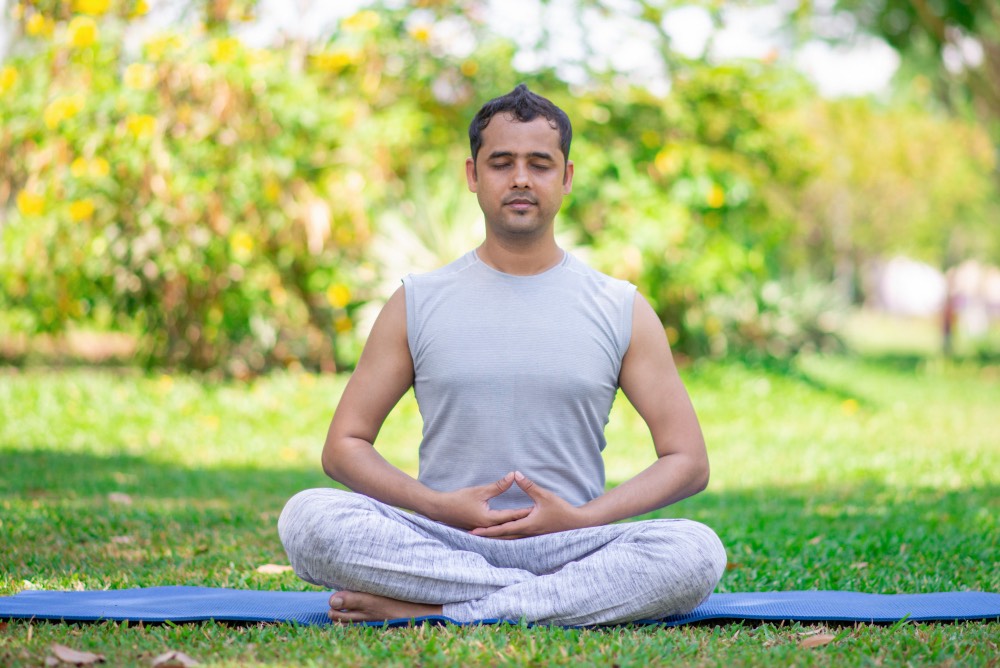
Start by sitting comfortably in a quiet place. You can sit on a chair or on the floor—what matters is that your body feels relaxed and stable. Keep your back straight but not stiff, and gently close your eyes.
Now begin repeating a mantra softly in your mind:
Hare Krishna Hare Krishna
Krishna Krishna Hare Hare
Hare Rama Hare Rama
Rama Rama Hare Hare
Repeat the mantra gently without rushing or forcing concentration. The key is to hear the sound internally as you repeat it. This keeps your attention connected naturally, without effort.
If your mind wanders, do not try to stop it. This is completely normal. Simply bring your attention back to the mantra gently. This returning process helps your mind become more stable over time.
Practice this for about 10–20 minutes daily. You do not need perfect sessions—some days may feel calm, others distracted. What matters is consistency.
Unlike Yoga Nidra:
- you stay aware throughout the practice
- you do not depend on guidance
- your mind learns to settle naturally
Over time, you will notice deeper calmness, better focus, and reduced overthinking—not because you controlled your mind, but because it became naturally stable.
👉 This is what makes Transcendental Meditation simple, practical, and effective for long-term use.
Conclusion – Choosing the Right Meditation Method
Yoga Nidra meditation is a powerful tool for relaxation and improving sleep. It helps the body release tension and allows the mind to slow down, which is why many people use it for stress relief and better rest.
However, it is important to understand its limitation. Yoga Nidra is mainly a guided relaxation technique, not a complete meditation system for long-term mental growth. Because it is passive and often leads to sleep, it does not always develop awareness or consistency.
If your goal is:
- better sleep → Yoga Nidra can help
- deeper awareness and long-term calmness → you need something more
Transcendental Meditation offers that balance. It keeps your mind aware without effort, does not depend on guidance, and is easier to practice daily. This makes it more suitable for building a consistent and deeper meditation habit.
👉 Final takeaway:
Yoga Nidra = relaxation and sleep
Transcendental Meditation = awareness and lasting mental clarity
Choosing the right method depends on your goal—but if you want a practice that goes beyond relaxation and builds true inner stability, a mantra-based approach can make a significant difference.
Frequently Asked Questions (FAQ)
1. What is Yoga Nidra meditation?
Yoga Nidra is a guided relaxation technique where you lie down and follow instructions to reach a state between sleep and awareness.
2. How to do Yoga Nidra meditation?
Lie down comfortably, follow a guided body scan, observe your breath, and stay relaxed while listening to instructions.
3. What are the benefits of Yoga Nidra meditation?
It helps reduce stress, improve sleep, relax the body, and calm the mind.
4. Is Yoga Nidra good for sleep?
Yes, it is very effective for sleep because it deeply relaxes the body and reduces mental activity.
5. Is Yoga Nidra a complete meditation practice?
It is mainly a relaxation technique. For deeper awareness and long-term meditation benefits,