
Vipassana vs Transcendental Meditation: Which One Truly Works?
Meditation is often presented as a universal solution for mental calm, clarity, and balance. Yet many people try meditation and quietly give up—not because they lack sincerity, but because the method they chose didn’t suit their mind or lifestyle. Understanding the differences between meditation practices is essential before committing to one.
Vipassana and Transcendental Meditation are two well-known approaches, each rooted in a distinct way of working with the mind. While both aim at inner clarity, they differ greatly in method, effort required, and suitability for modern life. This comparison is not about deciding which practice is “better,” but about discovering which one genuinely works for you.
For many people today—especially those with busy schedules, restless minds, or emotional overload—the question is not whether meditation is useful, but which form of meditation can be practiced consistently and effortlessly. That is where this comparison becomes meaningful.
Why Choosing the Right Meditation Method Matters
Many people assume that if meditation feels difficult, the problem lies with them. In reality, the struggle often comes from a mismatch between the meditation method and the nature of the mind. Different techniques demand different levels of effort, discipline, and environmental support, and not every method suits every individual.
When the method does not align with one’s mental tendencies or daily routine, meditation can feel forced, frustrating, or unsustainable. This leads many sincere practitioners to abandon meditation altogether, believing it simply “doesn’t work” for them. The issue, however, is rarely a lack of capability—it is a matter of compatibility.
Choosing the right meditation practice is therefore not about willpower or endurance, but about finding a method that works naturally with your mind and lifestyle. A suitable practice should encourage consistency, reduce resistance, and support inner calm without excessive effort. This understanding becomes crucial when comparing Vipassana and Transcendental Meditation.
What Is Vipassana Meditation?
Vipassana meditation is a practice centered on observation and insight. The word Vipassana means “to see things as they really are.” In this method, practitioners observe bodily sensations, thoughts, and emotions with sustained awareness, without reacting to them.
The core emphasis of Vipassana is silent observation. Instead of engaging the mind with sound or repetition, the practitioner watches sensations and mental movements as they arise and pass away. Over time, this process is meant to develop insight into the impermanent nature of experience.
Vipassana is traditionally practiced in structured settings, often through intensive retreats that require long hours of silent sitting and strict discipline. This approach can be deeply meaningful for individuals who are naturally introspective, patient, and comfortable with extended periods of silence and self-observation.
Key characteristics of Vipassana meditation:
- Focus on silent awareness and observation
- Attention placed on bodily sensations and mental processes
- Requires discipline and sustained mental effort
- Often practiced in retreat-style environments
While Vipassana offers depth and insight, its silent and effort-intensive nature can feel challenging for many people, especially beginners or those living fast-paced modern lives.
What Is Transcendental Meditation?
Transcendental Meditation is a sound-based meditation practice that uses a mantra to gently guide the mind inward. Rather than observing thoughts or sensations, the practitioner allows attention to settle naturally through the repetition of sound. This makes the process feel effortless rather than effort-driven.
The defining quality of Transcendental Meditation is ease. The mind is not asked to concentrate, analyze, or remain silent. Instead, the mantra provides a subtle anchor that allows mental activity to settle on its own. As attention rests on sound, awareness gradually moves beyond surface-level thinking into a calmer, more settled state.
Unlike methods that require long periods of silence or strict discipline, Transcendental Meditation can be practiced comfortably within daily life. Short sessions practiced consistently are often sufficient, making it especially suitable for people with busy schedules, emotional demands, or restless minds.
Key characteristics of Transcendental Meditation:
- Uses mantra (sound) as the focal point
- Emphasizes effortlessness over discipline
- Does not require observation or mental control
- Can be practiced easily in daily life
Because it works with the mind rather than against it, Transcendental Meditation is often experienced as natural, calming, and sustainable—especially for modern practitioners.
Vipassana vs Transcendental Meditation – Key Differences
While both Vipassana and Transcendental Meditation aim to bring clarity and inner calm, they differ significantly in how they work with the mind. These differences play a crucial role in determining how easy—or difficult—the practice feels over time.
Vipassana relies on silent observation. The practitioner continuously observes sensations and thoughts, requiring sustained awareness and mental stability. This process can feel intense, especially when the mind is restless or emotionally charged.
Transcendental Meditation, on the other hand, relies on sound and engagement. The mantra gives the mind a gentle anchor, reducing the need for effort or control. Instead of watching thoughts, the mind naturally settles through repetition.
Key differences between Vipassana and Transcendental Meditation:
- Silence vs Sound:
Vipassana emphasizes silence and observation, while Transcendental Meditation uses sound to guide awareness. - Effort vs Effortlessness:
Vipassana requires sustained attention and discipline; Transcendental Meditation allows the mind to settle naturally. - Mental Engagement:
Vipassana involves continuous monitoring of experience; Transcendental Meditation engages the mind gently through mantra. - Environment Dependency:
Vipassana often works best in quiet, structured settings; Transcendental Meditation can be practiced easily in everyday environments. - Consistency:
Many find Vipassana challenging to maintain daily, while Transcendental Meditation tends to be easier to sustain.
These differences explain why many people who struggle with silent, effort-based practices often feel more comfortable with sound-based Transcendental Meditation.
Why Vipassana Feels Difficult for Many Beginners
Vipassana meditation demands a high level of mental steadiness from the very beginning. The practice asks the meditator to remain silently aware of sensations and thoughts without reacting to them. For beginners—especially those with active or emotionally charged minds—this can feel overwhelming.
Silence often amplifies mental activity rather than calming it. Without a clear focal point, thoughts may become louder, distractions more noticeable, and emotional discomfort harder to manage. This can lead to frustration, self-doubt, or the belief that one is “doing it wrong.”
Another challenge lies in the structure of Vipassana practice. Traditional approaches often emphasize long sitting periods, strict discipline, and retreat-style environments. While this depth can be valuable for some, it may not align with the realities of modern life, where time, energy, and mental space are limited.
Common beginner challenges with Vipassana:
- Difficulty maintaining silent observation
- Increased awareness of restlessness and discomfort
- Emotional intensity without a calming anchor
- High discipline requirements
- Difficulty sustaining practice outside retreats
These challenges do not indicate a flaw in the practitioner, but rather a mismatch between the method and the needs of many beginners.
Why Transcendental Meditation Is Easier to Practice Consistently
Transcendental Meditation is often easier to maintain because it aligns naturally with how the mind functions. Instead of asking the practitioner to remain silent or constantly observe thoughts, it provides a mantra—a gentle sound that gives the mind something to rest on. This reduces resistance and mental strain.
Because the practice is effortless, consistency becomes more achievable. Even on days when the mind feels restless or emotionally overloaded, the mantra continues to support the process. There is no need to judge the quality of the session or force a particular experience. The practice works regardless of mood or mental state.
Another important factor is flexibility. Transcendental Meditation does not require long sitting periods, complete silence, or special environments. Short, regular sessions can be practiced at home or integrated into daily routines, making it realistic for modern lifestyles.
Why many people stay consistent with Transcendental Meditation:
- The mantra gently anchors attention
- No effort to control or analyze thoughts
- Works even when the mind is restless
- Easy to practice within daily life
- Encourages relaxation rather than discipline
This ease and adaptability explain why many people who struggle with silent practices find Transcendental Meditation more sustainable over time.
Vipassana Meditation vs Transcendental Meditation for Mental Calm
Both Vipassana and Transcendental Meditation aim to bring mental calm, but they approach it in fundamentally different ways. Vipassana develops calm through observation and insight. As practitioners observe sensations and thoughts without reacting, understanding gradually arises, and calmness may follow over time.
This process, however, can feel emotionally intense in the early stages. Observing thoughts without a stabilizing anchor often brings buried restlessness or discomfort to the surface. Calmness in Vipassana is something that emerges after sustained discipline and continued practice.
Transcendental Meditation approaches mental calm more directly. By engaging the mind with sound, agitation begins to soften naturally. The mantra absorbs mental energy, allowing the nervous system to relax without conscious effort. Calmness is not something achieved later—it is experienced during the practice itself.
Key differences in how calm is experienced:
- Vipassana emphasizes insight first, calm later
- Transcendental Meditation allows calm to arise naturally through sound
- Vipassana requires emotional endurance
- Transcendental Meditation supports gentle mental settling
For individuals seeking immediate mental relief alongside long-term stability, Transcendental Meditation often feels more supportive and accessible.
If Vipassana Didn’t Work for You, What Next?
If Vipassana meditation felt overwhelming, frustrating, or unsustainable, it does not mean meditation is not for you. In most cases, it simply means the method did not align with how your mind naturally functions. Many sincere practitioners quietly carry this misunderstanding, believing they failed at meditation when the reality is quite the opposite.
Meditation is not meant to feel like endurance training. If a practice consistently creates tension, resistance, or mental fatigue, it may be time to explore an approach that supports the mind rather than challenges it. Struggle is not a prerequisite for progress.
For those who found silent observation difficult, sound-based meditation often becomes a natural next step. By engaging attention through mantra, the mind is gently guided inward without pressure. This shift—from observation to engagement—can transform meditation from a demanding task into a calming experience.
Choosing a method that feels supportive allows meditation to become consistent, nourishing, and sustainable—qualities essential for real transformation.
Getting Started with Transcendental (Mantra-Based) Meditation
Beginning Transcendental Meditation does not require preparation, belief, or mental conditioning. The practice is designed to be simple from the very start. Instead of training the mind to observe or control thoughts, it allows awareness to settle naturally through sound.
At the heart of the practice is the use of a mantra. The mantra is not analyzed or forced; it is gently repeated and listened to. This listening becomes the meditation. As attention rests on sound, mental activity gradually softens without effort.
What makes this approach accessible is its flexibility. There is no need for perfect posture, extended sitting, or a silent environment. Even short, consistent sessions can support noticeable calm and clarity. The emphasis is not on doing meditation “correctly,” but on allowing the process to unfold naturally.
Transcendental Meditation invites experience over theory. Rather than understanding meditation intellectually, practitioners are encouraged to feel its effects directly—making it easier to continue and integrate into daily life.
Conclusion: Vipassana vs Transcendental Meditation — Choose What Works
Vipassana and Transcendental Meditation both offer meaningful paths, but they serve different types of minds. Vipassana emphasizes silent observation and insight, which can be deeply transformative for those comfortable with discipline, silence, and sustained effort. For many others, however, this approach feels demanding and difficult to maintain.
Transcendental Meditation offers a gentler alternative. By using sound as the focal point, the mind is naturally guided inward without force or strain. The mantra becomes a support rather than a challenge, allowing calmness to arise effortlessly during the practice itself.
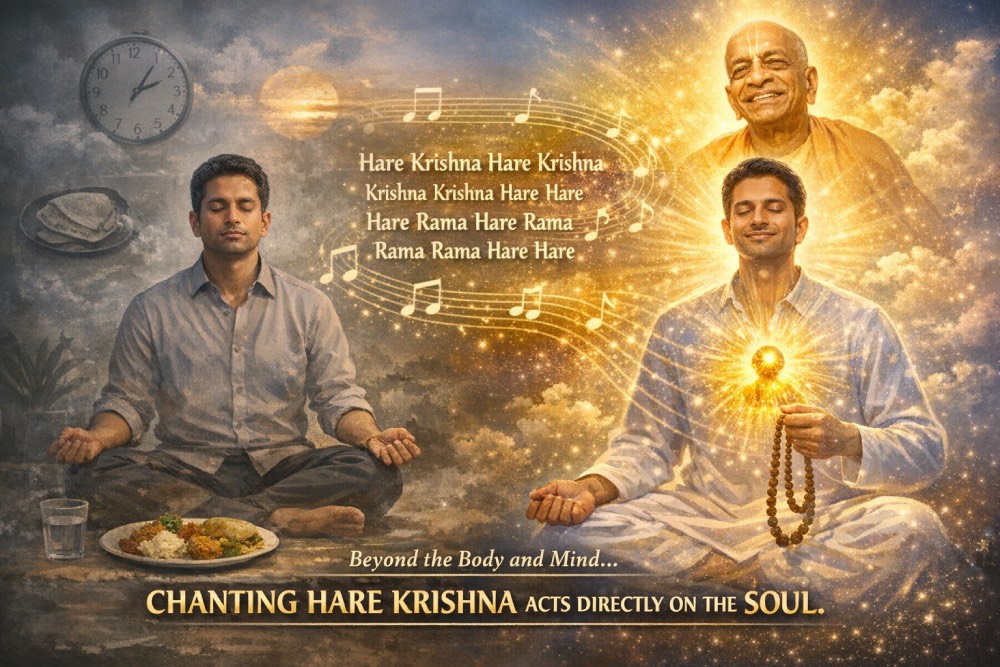
A commonly used mantra in transcendental, sound-based meditation is:
“Hare Krishna Hare Krishna
Krishna Krishna Hare Hare
Hare Rama Hare Rama
Rama Rama Hare Hare”
In this practice, the mantra is not analyzed or mentally processed. It is softly chanted or listened to, allowing awareness to settle through sound. The mind does not need to fight thoughts or maintain silence—the sound itself gently absorbs attention.
Ultimately, the right meditation practice is the one you can practice consistently, peacefully, and naturally. If silent observation feels like a struggle, transcendental meditation offers a way forward—one that works with the mind rather than against it. Experience, not endurance, is what leads to lasting calm.