
Spiritual Meditation: How to Practice, Benefits, Awakening & Healing Guide
Introduction – Why People Search for Spiritual Meditation
Many people today are searching for something deeper than just relaxation. This is why terms like spiritual meditation, spiritual healing meditation, and meditation for spiritual awakening are becoming increasingly popular. While some begin meditation to reduce stress, many continue because they feel a deeper need for meaning, clarity, and inner peace. In a fast-paced world filled with distractions, people often feel disconnected—from themselves and from a deeper sense of purpose.
Spiritual meditation is often seen as a way to go beyond the surface level of thoughts and emotions and connect with something more meaningful within. It is not just about calming the mind, but about understanding yourself at a deeper level.
- helps connect with inner awareness
- reduces emotional and mental confusion
- supports deeper clarity and purpose
- promotes inner peace beyond stress relief
- often linked with spiritual growth
- attracts people seeking meaning in life
What Is Spiritual Meditation?
Spiritual meditation is a practice that goes beyond relaxation and focuses on inner awareness and deeper understanding of the self. While regular meditation is often used to reduce stress or improve focus, spiritual meditation aims to help you connect with something beyond the surface level of thoughts. It encourages you to look inward and observe your mind, emotions, and awareness more deeply.
In this type of meditation, the goal is not just to feel calm, but to develop a sense of clarity, presence, and connection. This can be understood as becoming aware of your true nature beyond constant thinking. Instead of reacting to thoughts, you begin to observe them, which gradually creates distance from mental distractions.
Spiritual meditation can be practiced in different ways. Some methods focus on breath awareness, others on visualisation, and some use sound or mantra. Each approach aims to guide the mind inward, but the experience can vary depending on the method used.
- focuses on deeper self-awareness
- goes beyond stress relief
- encourages inner observation
- develops clarity and presence
- can involve different techniques
- aims for connection beyond thoughts
Types of Spiritual Meditation (Simple Overview)
Spiritual meditation can be practiced in different ways, depending on how you prefer to focus your attention. While the goal remains the same—inner awareness and deeper connection—the method used can vary. Some techniques rely on observation, while others give the mind something more active to follow. Understanding these types helps you choose what feels natural and sustainable for you.
One common method is breath-based meditation, where you observe your breathing to bring the mind into the present moment. This is simple, but many beginners find it difficult to maintain focus because the mind can wander easily.
Another approach is mindfulness meditation, which involves observing thoughts and sensations without reacting. This builds awareness, but it can feel abstract and challenging when the mind is very active.
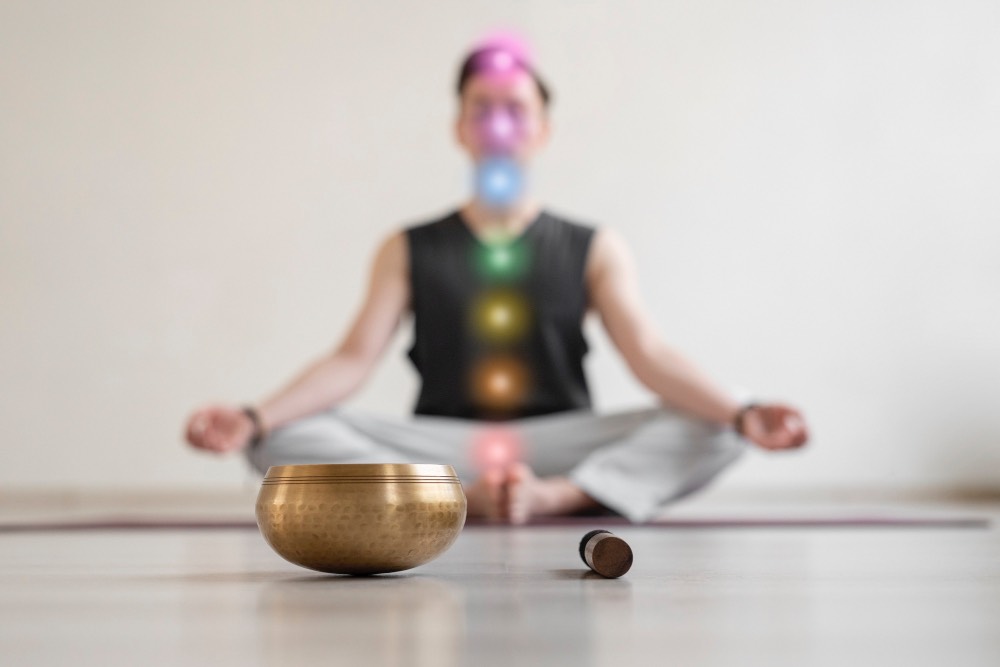
Some people practice chakra or energy-based meditation, where attention is placed on different parts of the body. This method is structured but can become complex due to multiple focus points.
Finally, there is mantra-based meditation, where a sound or phrase is repeated. This gives the mind a clear and steady focus, making it easier to stay engaged and reduce distraction naturally. Because of its simplicity, many people find this method more practical for daily use.
- breath meditation → observation-based
- mindfulness → awareness of thoughts
- chakra meditation → structured focus on energy
- mantra meditation → sound-based focus
- different methods suit different people
- simpler methods are easier to sustain
How to Do Spiritual Meditation (Step-by-Step)
Spiritual meditation is not about forcing the mind to become silent. It is about gently guiding your awareness inward so that the mind can settle naturally. Many beginners think they need to stop thoughts completely, but the real practice is learning how to observe and redirect attention without effort. The method you choose plays an important role in how easy or difficult the practice feels. A simple and steady approach makes meditation more consistent and effective over time.
1. Choose a Calm and Quiet Environment
Start by selecting a place where you can sit without disturbance. A quiet environment helps reduce external distractions and allows your mind to settle more easily. You do not need a perfect setup, but minimizing noise and interruptions can improve your experience.
2. Sit in a Comfortable Position
Sit in a relaxed posture with your back straight but not stiff. You can sit on a chair or on the floor. The goal is to stay comfortable while remaining alert. If your body is tense, your attention will keep shifting, so comfort is important.
3. Close Your Eyes and Relax Your Body
Gently close your eyes and allow your body to relax. Release tension from your shoulders, face, and neck. This helps your body move into a restful state, which supports mental calmness.
4. Bring Your Attention Inward
Instead of focusing on the outside world, shift your awareness inward. You can begin by noticing your breath or your inner state. This step helps you disconnect from external distractions and become more present.
5. Choose a Simple Focus (Preferably a Mantra)
This is the most important step. Your mind needs a clear point of focus. While some methods use breath or observation, many people find it easier to use a mantra. Repeating a simple sound gives your mind something steady to follow, reducing distraction naturally.
6. Handle Thoughts Naturally
Thoughts will come during meditation. Do not try to stop them. Simply notice when your mind wanders and gently bring your attention back to your focus. This returning is the core of meditation.
7. Practice Consistently
Meditation becomes effective with regular practice. Start with 10–20 minutes daily. Consistency matters more than duration. Over time, your mind will become calmer and more stable.
Key Understanding
Spiritual meditation is not about achieving a special state instantly. It is a gradual process of moving from distraction to awareness. The simpler the method, the easier it becomes to stay consistent and experience deeper calmness.
Spiritual Benefits of Meditation
Spiritual meditation offers benefits that go beyond relaxation and stress relief. As you practice regularly, you begin to notice changes not only in your mind but also in your awareness, emotions, and overall perspective on life. These benefits develop gradually as the mind becomes quieter and more stable. Instead of reacting to every thought, you start observing them, which creates a sense of inner clarity and balance.
One of the most important benefits is inner peace. When mental activity slows down, the constant noise of thoughts reduces, allowing you to feel calmer from within. This calmness is not dependent on external situations, making it more stable and lasting.
Another benefit is self-awareness. Meditation helps you understand your thoughts, emotions, and reactions more clearly. This awareness allows you to respond to situations with more clarity instead of reacting impulsively.
Spiritual meditation also supports emotional balance. As you become less attached to passing thoughts and feelings, emotional ups and downs become less intense. This leads to a more stable and peaceful state of mind.
Over time, many practitioners also experience a sense of connection and clarity. This is often described as feeling more aligned with oneself and having a clearer understanding of life.
- develops inner peace and calmness
- increases self-awareness
- improves emotional balance
- reduces overthinking
- brings clarity and stability
- supports deeper inner connection
Meditation & Spiritual Awakening
Spiritual awakening is often described as a shift in awareness where you begin to see beyond constant thoughts and mental patterns. It is not a sudden event for most people, but a gradual process of becoming more aware and less reactive. Meditation plays an important role in this process because it helps quiet the mind and create space for deeper observation.
In the beginning, awakening may simply feel like moments of clarity—short periods where the mind is calm and you feel more present. Over time, these moments can become more frequent. You may start noticing that you are less affected by stress, less attached to unnecessary thoughts, and more aware of your inner state.
However, many people misunderstand spiritual awakening as something dramatic or extraordinary. In reality, it is often subtle. It shows up as increased clarity, stability, and awareness, rather than intense experiences.
The method of meditation you use can influence how easily this process develops. Techniques that require effort or complex focus can sometimes make it harder to stay consistent. On the other hand, simpler methods allow the mind to settle more naturally, making it easier to experience deeper awareness over time.
- awakening is a gradual process
- begins with small moments of clarity
- reduces attachment to thoughts
- increases awareness and presence
- does not require dramatic experiences
- develops with consistent practice
Spiritual Healing Through Meditation
Spiritual meditation is often used as a way to support emotional healing and inner balance. Many people carry stress, past experiences, and unresolved emotions without realizing it. These can create mental restlessness and emotional discomfort. Meditation provides a space where the mind becomes quiet enough to process and release these inner tensions naturally.
When you sit in meditation and your mind begins to slow down, deeper layers of thoughts and emotions may come to the surface. This is not a problem—it is part of the healing process. Instead of suppressing or reacting to these emotions, meditation allows you to observe them calmly. Over time, this reduces their intensity and creates a sense of relief.
Spiritual healing through meditation does not mean fixing everything instantly. It is a gradual process where the mind becomes lighter, clearer, and more balanced. As awareness increases, emotional reactions become less overwhelming, and you begin to respond to situations with more stability.
The effectiveness of this process depends on how easily you can stay with the practice. Methods that are simple and consistent tend to support healing better, because they allow you to return to meditation regularly without resistance.
- helps release emotional tension
- reduces stress and mental pressure
- supports inner balance
- improves emotional stability
- allows natural processing of feelings
- creates a sense of inner clarity
Why Many Spiritual Methods Feel Difficult
Many spiritual meditation methods are designed to help you go inward, but for beginners, they can often feel unclear and difficult to follow. The main reason is that these methods rely on abstract concepts like awareness, presence, or inner observation. While these ideas are meaningful, they do not always give the mind a clear direction.
When you are asked to simply “observe” or “be aware,” the mind may not know what to hold onto. This can lead to frequent distractions and wandering thoughts. Without a strong anchor, it becomes harder to stay focused for even a few minutes.
Another reason is that many methods depend on effort and control. Trying to watch your thoughts or maintain awareness continuously can feel tiring, especially when the mind is already active. Over time, this effort can make meditation feel like a task rather than a natural process.
Because of this, beginners often experience:
- lack of a clear point of focus
- dependence on abstract awareness
- frequent distraction
- mental fatigue from trying to concentrate
- difficulty maintaining consistency
This is why many people start looking for a method that feels more natural and easier to sustain—something that gives the mind a clear direction without requiring constant effort.
Why Mantra-Based Meditation Is More Effective
Mantra-based meditation is often more effective for spiritual practice because it gives the mind a clear and consistent point of focus. Instead of relying on abstract awareness or continuous observation, it uses sound as a simple anchor. When you repeat a mantra, your attention naturally follows it, making it easier to stay present without forcing concentration.
The mind is naturally active and prefers engagement rather than emptiness. In many spiritual methods, the lack of a clear focus makes it difficult to maintain attention. In contrast, mantra meditation provides a steady rhythm through repetition. This rhythm helps reduce overthinking and allows the mind to settle more naturally.
Another important advantage is simplicity. You do not need to visualize, analyze, or control anything. You simply repeat and hear the mantra. This reduces mental effort and makes the practice easier to continue daily. Because of this, it becomes more consistent, which is essential for experiencing deeper results.
Over time, as the mantra continues, the mind gradually becomes quieter. This creates a state where awareness deepens without effort, supporting both spiritual growth and inner calmness.
- provides a clear focus for the mind
- reduces distraction naturally
- does not rely on abstract concepts
- requires less effort
- easier to practice consistently
- supports deeper inner stillness
Simple Spiritual Meditation You Can Start Today
If you are looking for a method that is simple, practical, and deeply effective, mantra-based meditation is one of the easiest ways to begin your spiritual practice. Instead of trying to observe thoughts or focus on abstract awareness, you give your mind a clear and steady point of attention through sound. This makes it easier to stay engaged and allows the mind to settle naturally.
You can use the following mantra:
Hare Krishna Hare Krishna
Krishna Krishna Hare Hare
Hare Rama Hare Rama
Rama Rama Hare Hare
Sit comfortably, close your eyes, and begin repeating the mantra softly in your mind. Let the repetition be natural and unforced. As you repeat, focus on hearing the sound clearly. When your mind wanders, gently bring it back to the mantra without frustration.
This simple process helps reduce overthinking, calm the mind, and gradually deepen your awareness. Over time, the repetition becomes effortless, and the mind begins to experience a natural sense of stillness and clarity.
- sit comfortably and relax your body
- repeat the mantra gently
- focus on hearing the sound
- do not force concentration
- return to the mantra when distracted
- practice daily for consistency
Frequently Asked Questions (FAQ)
1. What is spiritual meditation?
Spiritual meditation is a practice that focuses on inner awareness and deeper understanding of the self. It goes beyond relaxation and aims to develop clarity, presence, and connection within.
2. How to do spiritual meditation?
Sit comfortably, close your eyes, and bring your attention inward. You can focus on your breath or use a mantra to help the mind settle. Gently return your focus whenever the mind wanders.
3. What are the spiritual benefits of meditation?
Spiritual meditation helps develop inner peace, self-awareness, emotional balance, and clarity. It also reduces overthinking and supports a deeper sense of connection within.
4. What is spiritual awakening in meditation?
Spiritual awakening is a gradual process where you become more aware of your thoughts and less reactive to them. It often appears as increased clarity, calmness, and presence.
5. How does meditation help with spiritual healing?
Meditation helps release emotional tension, reduce stress, and create inner balance. It allows you to observe and process feelings naturally, leading to emotional healing over time.
6. Why is spiritual meditation difficult for beginners?
Many methods rely on abstract awareness without a clear focus, which makes it easy for the mind to wander. This can make it harder to stay consistent.
7. What is the easiest type of spiritual meditation?
Mantra-based meditation is often the easiest because it gives the mind a clear point of focus through repetition, making it easier to reduce distraction.
Conclusion – From Seeking to Experiencing
Spiritual meditation begins as a search—for peace, clarity, healing, or deeper understanding. Along the way, you may explore different methods such as breath awareness, mindfulness, or energy-based practices. Each of these can help you move inward and understand your mind better.
However, as your practice deepens, one thing becomes clear:
👉 the simpler the method, the deeper the experience
Techniques that require effort, control, or complex focus can make it harder to stay consistent. On the other hand, simple practices allow the mind to settle naturally without resistance.
This is where mantra-based meditation becomes powerful. By repeating a single mantra, you give the mind a steady anchor. Over time, thoughts reduce, awareness deepens, and inner calmness becomes more natural.
Instead of constantly searching for experiences, meditation becomes a space where you simply experience stillness and clarity directly.
- spiritual meditation begins with seeking
- deeper experience comes with simplicity
- consistency matters more than complexity
- mantra helps the mind settle naturally
- awareness deepens without effort
If your goal is not just to explore meditation but to experience lasting inner peace and clarity, then a simple and consistent approach like mantra-based meditation can be the most natural path forward.