
BK Shivani Meditation (Rajyoga): Steps, Benefits & Better Alternative Explained

Introduction – Why BK Shivani Meditation Is So Popular
In recent years, there has been a significant rise in searches for terms like bk shivani meditation, rajyoga meditation by bk shivani, and meditation for stress and peace. This reflects a growing need among people to find simple and practical ways to manage stress, overthinking, and emotional imbalance in daily life. Many individuals are looking for guidance that is easy to understand and can be applied without complexity.
BK Shivani, through her teachings on Rajyoga meditation, has become widely known for explaining meditation in a very relatable and structured way. Her approach focuses on understanding the self as a soul, creating positive thoughts, and developing inner awareness. Because of this, many beginners feel comfortable starting their meditation journey through her guided methods.
People are especially drawn to this form of meditation for specific purposes such as reducing anxiety, improving sleep, gaining mental clarity, and achieving emotional balance. The idea of listening to guided commentary and following simple thought patterns makes it accessible, particularly for those who struggle with traditional silent meditation.
However, while this approach is helpful for many, beginners often begin to explore deeper questions over time. They look for methods that are easier to practice independently, require less mental effort, and provide a more natural sense of calmness.
In the next section, we will understand what BK Shivani meditation (Rajyoga meditation) actually is and how it works.
What Is BK Shivani Meditation (Rajyoga Meditation)?
BK Shivani meditation is based on the practice of Rajyoga meditation, which is taught by the Brahma Kumaris organization. This method focuses on developing awareness of the self as a soul rather than just the physical body. The idea is to shift your identity from external roles and situations to inner consciousness, which helps create stability and clarity in thoughts.
In Rajyoga meditation, the mind is actively engaged through positive thinking and guided awareness. Instead of focusing on silence or breath, practitioners are encouraged to create specific thoughts such as peace, purity, and happiness. This is why it is often called a “thought-based meditation” method. The mind is not emptied but directed.
A key aspect of BK Shivani’s approach is the use of guided commentary. Practitioners often listen to meditation guidance or internally repeat positive affirmations. These thoughts are used to influence emotions and gradually change mental patterns. The practice also includes visualisation, such as imagining oneself as a peaceful soul or connecting with a higher source of energy.
This method is especially helpful for beginners because:
- it provides clear guidance on what to think
- it keeps the mind engaged instead of forcing silence
- it focuses on practical life improvement
However, since the practice depends on creating and maintaining thoughts, the mind remains active during meditation. For some people, this can feel helpful in the beginning, but over time it may also feel effort-based.
In the next section, we will look at how to do BK Shivani meditation step by step in a simple and practical way.
How to Do BK Shivani Meditation (Step-by-Step Guide)
BK Shivani meditation follows a structured yet simple approach that focuses on guiding the mind through positive and purposeful thoughts. Unlike techniques that ask you to empty the mind, this method helps you consciously create thoughts that bring calmness and clarity. For beginners, this makes meditation feel more accessible because the mind is given clear direction instead of being left without focus.
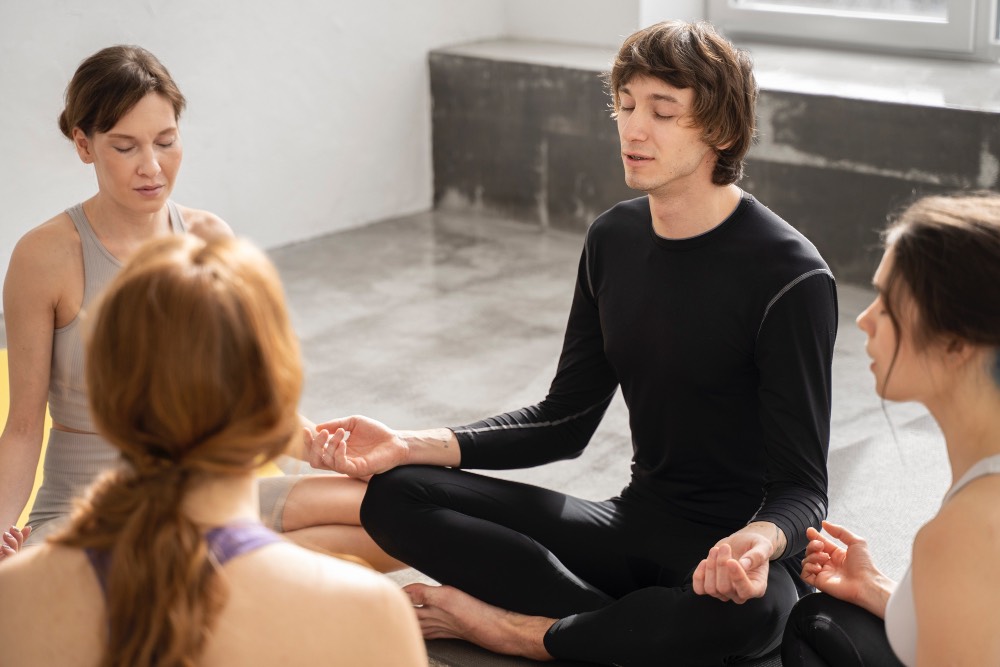
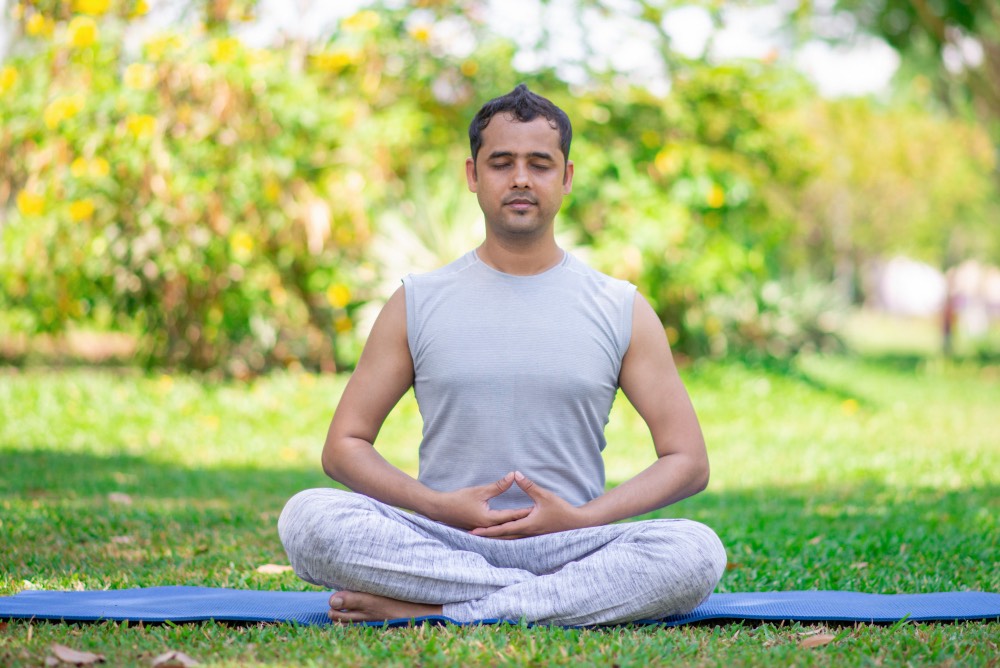
To begin, sit in a comfortable position in a quiet place where you will not be disturbed. You can sit on a chair or on the floor—what matters is that your body feels relaxed and stable. Keep your back straight but not stiff, and gently close your eyes. Allow your body to settle naturally without forcing stillness.
Once you are comfortable, bring your attention inward and start observing your thoughts. Instead of trying to stop thinking, begin creating slow and positive thoughts in your mind. For example, you may think, “I am a peaceful soul” or “I am calm and stable.” These thoughts are repeated gently to guide the mind toward a relaxed state.
As you continue, you can also visualise yourself as a point of light or energy. This visualisation is often used in Rajyoga meditation to help separate your identity from the body and connect with inner awareness. The combination of thought and visualisation keeps the mind engaged and reduces distraction.
If your mind wanders, do not try to control it forcefully. Simply bring it back to the chosen thought or affirmation. This process of returning is part of the practice. Over time, the repetition of positive thoughts creates a rhythm, helping the mind become more stable and less reactive.
You can practice this for 10 to 20 minutes daily. Many people prefer doing it in the morning or before sleep to calm the mind and set a positive tone.
The key understanding is that BK Shivani meditation works by directing the mind through thoughts. While this makes it easier for beginners, it also means the mind remains active throughout the practice.
In the next section, we will explore BK Shivani guided meditation and commentary style, which is a core part of this method.
BK Shivani Guided Meditation & Commentary Style
One of the most unique aspects of BK Shivani meditation is its guided commentary style. Unlike silent meditation practices, this method often involves listening to spoken guidance or internally following a structured flow of thoughts. This is why many people search for bk shivani guided meditation or meditation commentary by bk shivani—because the guidance plays a central role in the experience.
In this approach, meditation is not done in complete silence. Instead, the practitioner listens to a calm voice (or mentally repeats similar thoughts) that directs attention step by step. The commentary usually includes affirmations such as feeling peaceful, letting go of stress, or connecting with positive energy. These guided thoughts help the mind stay focused and reduce random thinking.
For beginners, this method feels easier because:
- the mind is continuously guided
- there is less confusion about what to do
- it reduces initial restlessness
The commentary acts like a support system for the mind. Instead of struggling with distractions, the practitioner follows a flow of structured thoughts. This can create a sense of comfort, especially for those who find silent meditation difficult.
However, this also creates a dependency on guidance. Many people feel they can meditate only when they are listening to an audio or following a script. Without guidance, the mind may struggle to stay focused because it is used to being directed.
Another important point is that since this method is based on thinking and listening, the mind remains active throughout the practice. While thoughts become more positive and controlled, they do not completely settle.
This leads many practitioners to eventually explore meditation techniques that require less guidance and allow the mind to settle more naturally.
In the next section, we will look at the benefits of BK Shivani meditation and why so many people are drawn to this practice.
Benefits of BK Shivani Meditation
BK Shivani meditation offers several practical benefits, especially for people who are dealing with stress, overthinking, and emotional imbalance. Since the method focuses on guiding the mind through positive thoughts, it helps create a more stable and constructive mental pattern over time. This is one of the main reasons why many people search for bk shivani meditation benefits or use it for specific purposes like stress relief and better sleep.
One of the most noticeable benefits is a reduction in stress and anxiety. By repeatedly creating calm and positive thoughts, the mind gradually shifts away from negative thinking patterns. This can help individuals feel more relaxed and emotionally balanced in daily life.
Another important benefit is improved emotional control. Instead of reacting immediately to situations, practitioners become more aware of their thoughts and responses. This awareness helps in handling challenges with more clarity and stability.
Many people also use this meditation for better sleep. Practicing it before bedtime can slow down mental activity and reduce overthinking, making it easier to fall asleep. Similarly, morning meditation helps set a positive tone for the day by creating focused and calm thoughts.
This method can also improve:
- mental clarity and decision-making
- self-awareness and inner understanding
- positive thinking habits
- overall emotional well-being
However, it is important to understand that these benefits come from actively guiding the mind through thoughts. The mind is still working during meditation, even though the thoughts are positive.
For some people, this works well in the beginning. But over time, they may start looking for a method where the mind can relax more deeply without continuously creating or managing thoughts.
In the next section, we will explore how BK Shivani meditation fits into daily routines, including morning and night meditation practices.
Morning & Night Meditation by BK Shivani
BK Shivani meditation is often practiced as part of a daily routine, especially during early morning and before sleep. These time-based practices are popular because they align with the natural state of the mind. In the morning, the mind is fresh and less cluttered, while at night, meditation helps release the mental load accumulated throughout the day.
Morning meditation, often referred to as amritvela meditation, is considered ideal in Rajyoga practice. During this time, practitioners sit in silence and create positive thoughts to start the day with clarity and stability. The mind is more receptive, making it easier to build a calm and focused state that can carry through daily activities. Many people find that morning meditation helps reduce stress, improve concentration, and maintain emotional balance throughout the day.
Night meditation, on the other hand, is used to slow down the mind before sleep. After a full day of activity, the mind tends to be filled with thoughts, worries, and unfinished conversations. Practicing meditation at night helps release this mental clutter. By creating peaceful thoughts and letting go of tension, the mind becomes quieter, making it easier to fall asleep.
This routine-based approach works well because:
- it builds consistency in practice
- it aligns meditation with natural mental states
- it helps manage both the start and end of the day
However, both morning and night meditation in this method still rely on actively creating and guiding thoughts. While this can be effective, some practitioners may eventually look for a more effortless approach where the mind settles naturally without continuous mental effort.
In the next section, we will explore some common challenges people face while practicing Rajyoga meditation.
Common Challenges in Rajyoga Meditation
While BK Shivani meditation (Rajyoga meditation) is helpful for many beginners, it is not without its challenges. Since the method is based on actively creating and managing thoughts, some people may find it difficult to maintain consistently over time. Understanding these challenges can help you decide whether this approach suits your long-term practice.
One of the main challenges is the need for continuous thinking. Even though the thoughts are positive, the mind is still active throughout the meditation. For people who are already dealing with overthinking, this can sometimes feel like an extension of mental activity rather than a complete state of rest.
Another common issue is dependency on guidance. Many practitioners become used to listening to guided commentary or following a structured script. Without this support, they may find it difficult to meditate independently. This can limit flexibility, especially when you want to practice anytime or anywhere.
Maintaining focus is also a challenge. Since the method requires consciously directing thoughts, the mind can easily drift into unrelated thinking. Beginners may feel frustrated when they are unable to sustain positive thoughts for a long time.
Some people also experience:
- mental fatigue from continuous thought creation
- difficulty in achieving deeper stillness
- inconsistency in daily practice
- confusion about whether they are doing it correctly
These challenges do not mean the method is ineffective, but they highlight an important point: the practice requires effort and control of the mind.
Because of this, many practitioners eventually start exploring meditation techniques that are more effortless and do not rely heavily on thinking or external guidance.
In the next section, we will compare Rajyoga meditation with mantra-based meditation to understand this difference more clearly.
Rajyoga Meditation vs Mantra-Based Meditation (Key Difference)
To understand different meditation approaches clearly, it is helpful to look at the fundamental difference between Rajyoga meditation and mantra-based meditation. While both aim to calm the mind and improve awareness, the way they work is very different.
In Rajyoga meditation, the mind is guided through thoughts. You actively create positive ideas such as peace, happiness, or self-awareness. This keeps the mind engaged and gives it direction. The practice is structured and often supported by guided commentary or affirmations.
In mantra-based meditation, the approach is simpler. Instead of creating new thoughts, you repeat a single sound or mantra. The mind naturally follows this repetition, which reduces random thinking without needing to control or manage thoughts.
This difference changes the entire experience of meditation.
In Rajyoga meditation, you are:
- actively thinking and directing the mind
- using affirmations and visualisation
- maintaining awareness through effort
In mantra-based meditation, you are:
- repeating a sound gently
- allowing the mind to follow naturally
- reducing effort and mental activity
Because the mind prefers rhythm and repetition, mantra-based meditation often feels more natural over time. There is less need to guide thoughts or depend on external instructions. The process becomes smoother and easier to maintain consistently.
This is why many people who start with thought-based meditation eventually explore mantra-based approaches. They look for a method where the mind can settle more deeply without continuous effort.
In the next section, we will understand why mantra-based meditation is often considered easier and more effective for long-term practice.
Why Mantra-Based Meditation Is Easier & Deeper
One of the biggest challenges in meditation is handling an active mind without creating more effort. In thought-based methods like Rajyoga meditation, you are constantly guiding your mind through positive thinking. While this works initially, it still requires control and mental involvement.
Mantra-based meditation works in a more natural way. Instead of asking the mind to create or manage thoughts, it gives the mind a simple sound to follow. This changes the experience completely.
The mind is naturally active and prefers engagement. When you repeat a mantra, the mind becomes absorbed in the rhythm of the sound. This reduces unnecessary thinking without forcing silence. You are not trying to stop thoughts—you are simply giving the mind a better focus.
Another important advantage is effortlessness. In mantra-based meditation:
- you don’t need to control your thoughts
- you don’t need guidance or audio
- you don’t need to visualise anything
You simply repeat and hear the mantra. This makes the practice easier to follow daily, especially for beginners.
Over time, this repetition creates a natural calming effect. The mind becomes quieter not because you are controlling it, but because it is engaged in a steady and simple pattern. This allows deeper relaxation and stability compared to effort-based techniques.
This is the core principle behind transcendental meditation. It uses mantra repetition to help the mind settle naturally, without force or continuous thinking. Because of its simplicity, it becomes easier to practice consistently and experience deeper levels of calmness.
In the next section, we will look at a simple mantra meditation you can start practicing today.
Simple Mantra Meditation You Can Start Today
If you are looking for a meditation method that is simple, natural, and easy to practice without guidance, mantra meditation is a great place to start. Unlike thought-based methods, you do not need to create or control your thoughts. Instead, you gently repeat a mantra and allow your mind to follow it.
To begin, sit comfortably in a quiet place where you can relax without disturbance. You can sit on a chair or on the floor—just keep your body at ease. Close your eyes gently and take a few moments to settle.
Now start repeating the mantra softly in your mind:
Hare Krishna Hare Krishna
Krishna Krishna Hare Hare
Hare Rama Hare Rama
Rama Rama Hare Hare
Let the words flow naturally without forcing concentration. The key is not to repeat quickly or mechanically, but to hear each word internally as you say it. This helps your attention stay connected to the sound.
If your mind wanders, which is completely normal, do not get frustrated. Simply bring your attention back to the mantra gently. This returning is part of the practice and helps your mind become more stable over time.
You can practice this for 10–20 minutes daily. There is no need for a perfect session. Some days may feel calm, while others may feel distracted. Consistency is what brings results.
Over time, you will notice that your mind becomes quieter and more balanced without effort. This simple practice follows the same principle as transcendental meditation, where the repetition of a mantra allows the mind to settle naturally.
In the next section, we will compare BK Shivani meditation and transcendental meditation to help you understand which method is better for long-term practice.
Frequently Asked Questions (FAQ)
1. What is BK Shivani meditation?
BK Shivani meditation is a form of Rajyoga meditation that focuses on creating positive thoughts, self-awareness, and inner peace. It involves guided thinking and often includes commentary or affirmations to help direct the mind.
2. How to do Rajyoga meditation by BK Shivani?
You sit comfortably, close your eyes, and begin creating positive thoughts such as peace or self-awareness. The practice may also include visualisation and guided commentary to keep the mind focused.
3. Is BK Shivani meditation good for beginners?
Yes, it is beginner-friendly because it provides clear guidance on what to think. However, some people may find it effort-based over time since it requires continuous thinking.
4. Can I do BK Shivani meditation without guidance?
It is possible, but many beginners find it difficult without guided commentary because the method relies on structured thinking. This can make independent practice challenging.
5. What are the benefits of BK Shivani meditation?
It helps reduce stress, improves emotional balance, enhances positive thinking, and supports better sleep. The benefits come from consciously guiding the mind through positive thoughts.
6. Which meditation is easier: Rajyoga or transcendental meditation?
Rajyoga meditation involves active thinking and guidance, while transcendental meditation uses simple mantra repetition. Many people find mantra-based meditation easier because it requires less effort and feels more natural.
Conclusion – Choosing the Right Meditation Method
BK Shivani meditation offers a structured and practical way to begin your meditation journey. It helps you understand your thoughts, develop emotional awareness, and build a positive mindset. For beginners, this approach can be very helpful because it provides clear direction and guidance.
However, as you continue practicing, you may notice that constantly creating and managing thoughts requires effort. The mind remains active, even though the thoughts are positive. Over time, many people start looking for a method that allows deeper relaxation without continuous mental involvement.
This is where transcendental meditation becomes a natural next step. Instead of guiding the mind through thoughts, it allows the mind to settle through simple mantra repetition. This makes the practice more effortless, easier to maintain daily, and more effective for long-term calmness and clarity.
If your goal is not just to think positively but to experience deeper mental peace and stability, exploring transcendental meditation can be a powerful and practical choice.
Start simple, stay consistent, and allow your meditation practice to evolve naturally over time.